
Canada’s defence sector is growing. With NATO spending commitments driving increased domestic programme activity across land, air, and maritime domains, more Canadian companies are being asked to deliver electronics assemblies that meet defence-grade standards, often for the first time. For procurement managers and engineering leads evaluating manufacturing partners, that growth brings a specific challenge: knowing what to look for in a supplier before a programme is already underway.
Selecting an electronics manufacturer for defence work is a different exercise than selecting one for commercial production. The standards are more demanding, the documentation requirements are heavier, and the cost of a quality failure in the field extends well beyond a replacement unit. Getting the selection right from the start saves significant programme pain later.
What Makes Defence Electronics Manufacturing Different?
Most defence programmes specify IPC Class 3 workmanship standards, the highest classification under IPC-A-610. Class 3 covers assemblies where continuous performance is critical and field servicing is limited — communications hardware, control systems, vehicle electronics, and monitoring equipment that operates well outside controlled environments. The inspection criteria, solder joint requirements, and handling standards at Class 3 are substantially more rigorous than commercial-grade assembly, and not every contract manufacturer builds to them routinely.
Traceability requirements add another layer of complexity. Component-level lot codes, date codes, and supplier certifications need to be captured and retained throughout the build so that if a failure occurs years after delivery, the complete build record is available. First article inspection reports, test documentation, and material certifications are part of what gets delivered alongside the hardware. Manufacturers who build well but document inconsistently create compliance problems downstream that are difficult and expensive to resolve.
What Canadian Defence Contractors Should Evaluate in a Manufacturing Partner
1. Canadian Manufacturing Experience
A Canadian electronics manufacturer brings practical advantages to defence programmes that go beyond geography. Physical accessibility for facility audits, alignment with Canadian regulatory frameworks, and direct communication when a programme issue needs a fast answer are all easier to manage with a domestic supplier.
For programmes with Canadian content requirements under the Industrial and Technological Benefits Policy, domestic manufacturing also satisfies procurement obligations that offshore options cannot.
When a programme runs into difficulty (and most complex programmes do at some point), the ability to reach your manufacturer directly and get a same-day response matters considerably more than it does during the quoting phase.
2. Rugged and Harsh-Environment Builds
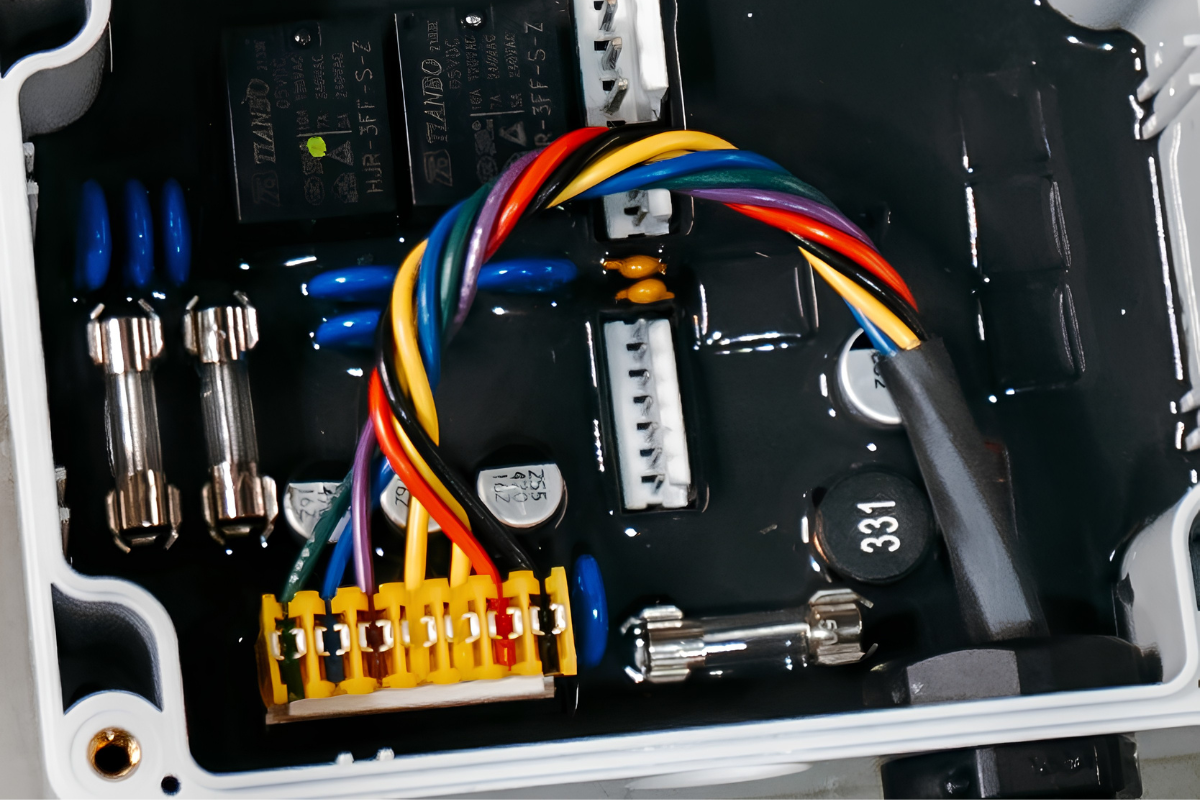
Defence electronics operate in conditions that commercial hardware rarely encounters. Armoured vehicles, airborne systems, field communications equipment, and remote monitoring installations expose assemblies to continuous thermal cycling, vibration, humidity, and contamination. Conformal coating, encapsulation, and careful attention to component placement and connector selection are standard practice in this work, not optional enhancements.
A manufacturer with real harsh-environment experience raises those considerations during the quoting process rather than after a first article fails. When a supplier reviews your design and asks questions about coating coverage, vibration exposure, or connector selection before providing a quote, it reflects a team that understands how design decisions translate into field performance.
3. Integrated Assembly Capability
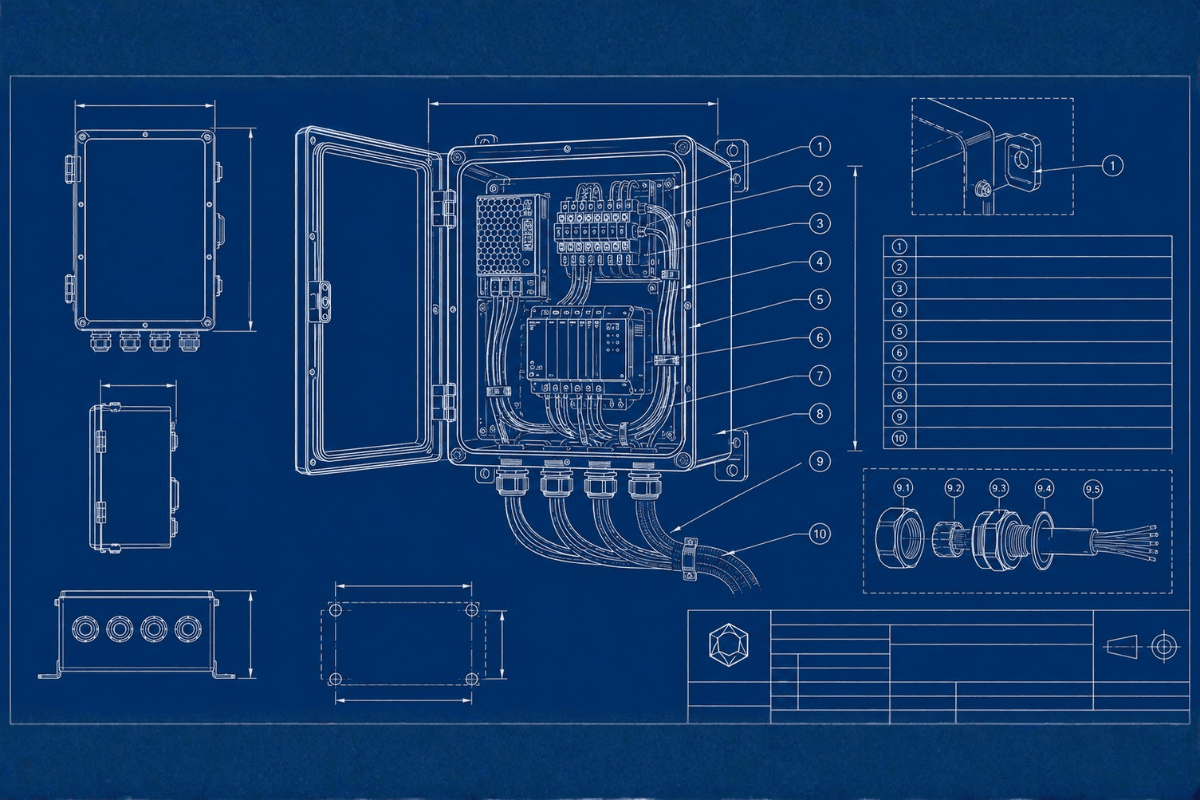
A manufacturing partner who handles circuit board assembly, cable and harness fabrication, sheet metal enclosures, and complete box build internally can carry a programme from initial build through finished deliverable without routing work through other subcontractors. For defence programmes where engineering change orders are a regular occurrence, that adds significant value. Each additional supplier in the chain is another handoff where an ECO can be implemented inconsistently or not at all.
Consolidated manufacturing also simplifies accountability. When questions arise about a build (and in long-cycle programmes they will), a single point of contact who owns the full scope of the work is considerably easier to work with than a multi-supplier chain where responsibility is distributed and sometimes disputed.
4. Realistic Lead Time Conversations
Defence procurement schedules carry downstream commitments that don’t flex easily. A manufacturer who commits to lead times they can’t reliably hit creates programme risk that surfaces at the worst possible time.
Before a purchase order is placed, it’s worth asking directly:
- What does your current production capacity look like?
- What’s a realistic lead time for a build of this complexity?
- How do you communicate when something is tracking behind schedule?
Manufacturers who know their operations well enough to give honest, specific capacity assessments are the ones whose delivery commitments are worth building a programme schedule around.
5. Quality Systems That Hold Up to Scrutiny
ISO 9001 certification establishes that a manufacturer has a documented quality management system in place. For defence work, that’s a strong foundation to build from. What matters alongside it is how quality is managed at the production level. Whether inspection is integrated into the build process, whether failures generate genuine root cause analysis, and whether the traceability documentation would hold up to a customer audit.
Asking to see a sample first article inspection report, or walking through how a field return is handled from receipt through resolution, adds useful texture to what the certifications confirm.
The Working Relationship In Long-Cycle Programmes
Defence programmes run for years. The manufacturer a procurement team selects may be building the same assemblies through multiple design revisions, component obsolescence events, and volume changes across a long production horizon. That duration makes the working relationship as important as the initial capability assessment.
An account team that knows the programme and its history, engineers who surface DFM concerns before they become build failures, and a production team that can absorb a mid-run ECO cleanly are qualities that show up in how a manufacturer operates day to day. They’re visible in the first difficult conversation a programme team has with their manufacturer. And in defence work, that conversation tends to come early.
How IMS Electronics Supports Defence Programmes
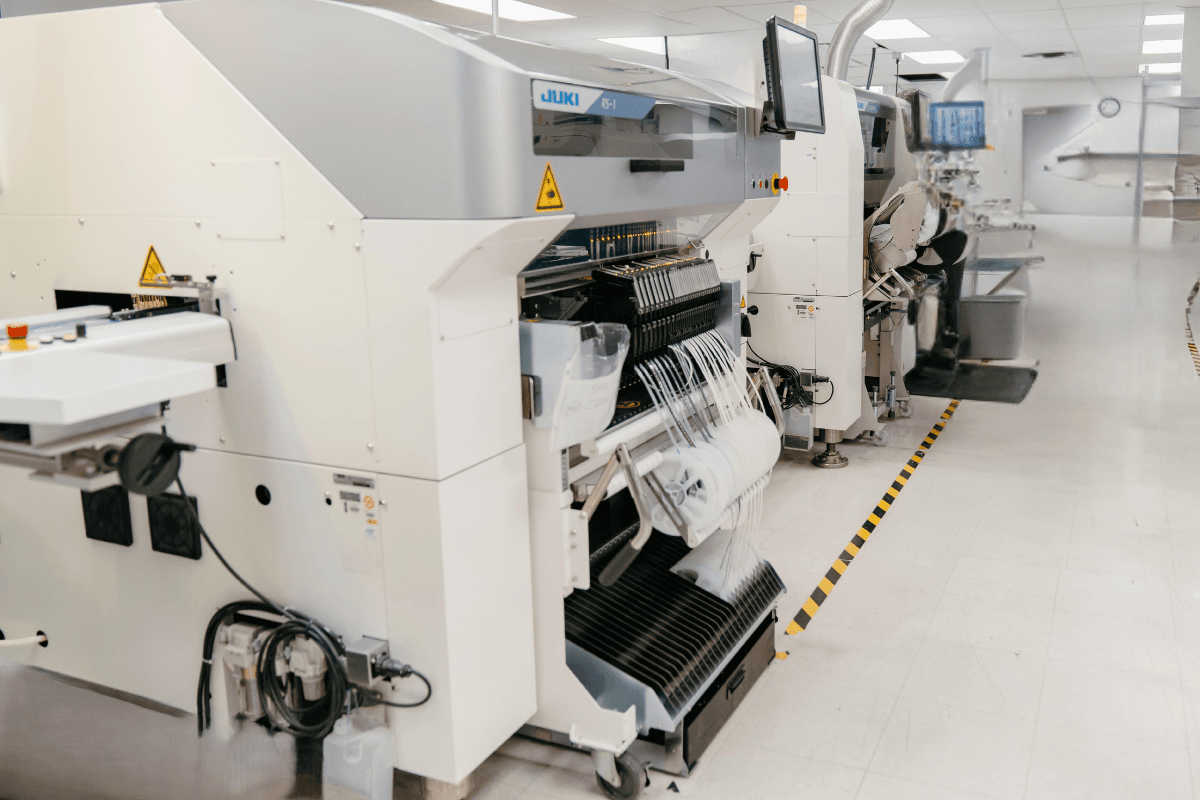
IMS Electronics Manufacturing supports defence and aerospace clients requiring IPC Class 3 workmanship, rigorous documentation, and integrated manufacturing capability across circuit board assembly, cabling, enclosures, and final system integration.
Based in Calgary, IMS holds ISO 9001 certification and is actively pursuing AS9100 and Controlled Goods certification as its defence and aerospace programme work continues to grow. Procurement teams whose programmes operate under an existing AS9100 certification are welcome to discuss building under that framework in the interim.
To discuss your build requirements, contact IMS at 587-816-4300 or complete our online form.