
The conversation of reshoring electronics manufacturing to Canada is happening in boardrooms and procurement teams across the country right now. They sound a lot like this: “Our overseas supplier missed another delivery window, our landed costs keep climbing, and we’re not sure who’s actually building our product anymore.” For many Canadian OEMs, the instinct is to look closer to home.
Reshoring electronics manufacturing to Canada is a legitimate and often smart response to that pressure. But it’s also a decision that deserves more preparation than urgency usually allows.
Moving production from an established overseas supplier to a Canadian contract manufacturer takes more than signing a new agreement. It requires a transfer of technical knowledge, a re-evaluation of your bill of materials, and a clear-eyed look at what “better” truly means for your programme.
This post walks through what that evaluation genuinely involves so that OEMs considering the move can plan for it properly rather than discover the hard parts after a contract is signed.
Why Canadian OEMs Are Reconsidering Where They Build
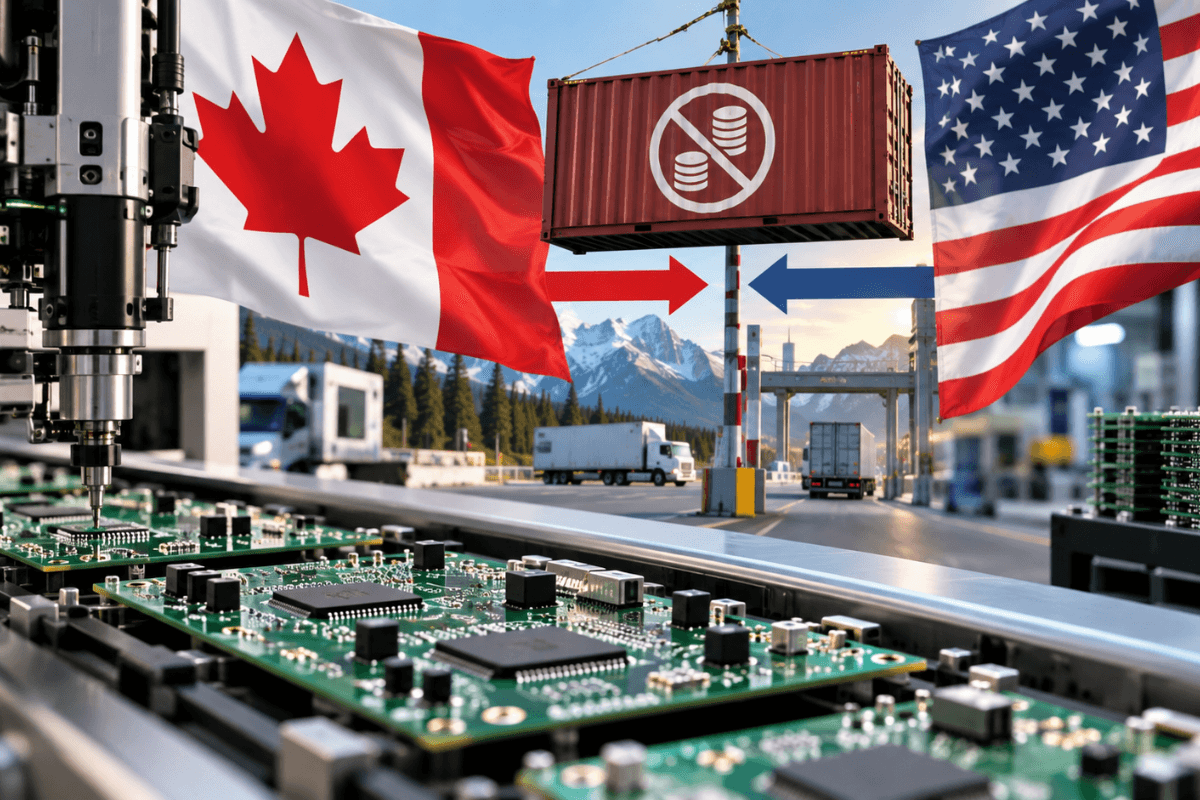
The conditions driving the reshoring conversation are real. U.S. tariffs on Chinese electronics imports are as high as 25%, adding significant cost pressure across electronics supply chains. The global EMS industry is navigating rapidly shifting trade policy, with tariffs on components like PCBs and semiconductors transforming cost structures that OEMs had built their product economics around for years.
For Canadian OEMs specifically, the calculation involves more than tariff exposure. Lead time volatility, quality escapes that are difficult to investigate from a distance, and the practical challenge of managing engineering change orders across twelve time zones have made offshore manufacturing feel less like a cost advantage and more like an operational liability for a growing number of companies.
Reshoring, where possible, often requires product redesign and typically means an 18- to 24-month transition process — a timeline that surprises companies who expect a supplier switch to work like a purchasing decision. Understanding that timeline, and what drives it, is the first step in planning a successful transition.
What Does Reshoring Electronics Manufacturing to Canada Involve?
1. A technical transfer, not just a supplier switch
The single biggest misconception in reshoring decisions is treating them as procurement decisions. Switching a Canadian electronics manufacturer in for an offshore one isn’t like switching a freight carrier.
Your new manufacturing partner needs to understand your product at a production level, including your bill of materials, your test requirements, your quality acceptance criteria, and the history of any design modifications that happened during the original production run.
That knowledge transfer takes time to do properly. It involves first article builds, process qualification, and, in many cases, a parallel run where both suppliers are producing so that the transition can be validated before the offshore relationship is terminated.
OEMs who skip this stage to move quickly tend to discover the gaps in the transfer when their first commercial production run fails inspection.
2. Your bill of materials may need revision
Electronics built offshore are often designed around component sources that are specific to Asian supply chains. Certain components that are readily available and inexpensive through Chinese distributors have longer lead times, higher minimum order quantities, or simply different pricing structures when sourced through North American channels.
Before a reshoring transition begins, a thorough BOM review against Canadian and North American component availability is worth doing. In some cases, minor component substitutions can smooth the transition considerably. In others, a more significant design revision is required to make the product practical to build domestically at a competitive cost.
Finding this out early, before a new manufacturing agreement is in place, avoids the situation where a Canadian manufacturer quotes a product they later can’t source effectively.
3. Quality standards need to be defined explicitly
Offshore manufacturing relationships that have run for years often carry institutional knowledge about what a product should look like that was never formally documented. Acceptable cosmetic variation, workmanship standards, test pass criteria….these things accumulate in a supplier relationship over time and frequently live in email threads and the memory of a sourcing manager rather than in formal documentation.
Before transferring to a Canadian manufacturer, that knowledge needs to be captured. Workmanship standards should reference a formal classification (IPC Class 2 for most commercial products, IPC Class 3 for products requiring higher reliability). Acceptance criteria for finished goods should be written down explicitly rather than communicated through sample parts. First article inspection should be planned as a formal milestone with documented sign-off.
This documentation work is often the most time-consuming part of a reshoring transition and also the most valuable. OEMs who do it well come out of the transition with better visibility into their own product than they had before.
4. Lead times will look different
One of the consistent surprises for OEMs reshoring from Asia is that Canadian lead times, while often more predictable, are not necessarily shorter in the early stages of a new relationship. Setup, first article, tooling, and initial production qualification all take calendar time. The advantage of domestic manufacturing isn’t primarily speed. It’s predictability, accessibility, and the ability to respond quickly when something needs to change.
Over time, that predictability tends to compress the actual operational lead time because engineering changes, quality responses, and production adjustments happen faster when your manufacturer is reachable during your business day. But the first production run with a new Canadian partner should be planned with appropriate lead time buffers, not against the same timeline that an established offshore relationship could hit.
5. Total cost needs honest accounting
Offshore manufacturing looks cheaper until the full cost picture is assembled. Freight, duties, carrying cost on the inventory required to buffer long lead times, the management overhead of coordinating across time zones, the cost of quality escapes that take weeks to investigate remotely, and the tariff exposure on finished goods and components all belong in the calculation.
Canadian manufacturing carries higher direct labour costs than Asian alternatives in most cases. That gap is real and shouldn’t be minimized. But when the total cost of ownership is calculated honestly (including the costs that don’t appear on an invoice), domestic manufacturing is often considerably closer to competitive than the unit price comparison suggests.
What to Look for in a Canadian Electronics Manufacturing Partner
The transition process is only as good as the partner you’re transitioning to. A few things matter more than others when evaluating a Canadian contract manufacturer for a reshoring programme.
→ Integrated capability. An OEM bringing a product home ideally wants a partner who can handle multiple stages of the build (PCB assembly, cable and harness, enclosures, and final box build), rather than one who handles a single stage and routes the rest to subcontractors. Consolidating those stages under one manufacturer simplifies the transition and reduces the number of relationships that need to be established and managed.
→ DFM capability. A manufacturer who can review your design and flag producibility issues before the first article build is a partner who will save you time and cost during the transition. Design for manufacturability feedback during the quoting process is a meaningful signal that an engineering team is engaged, not just quoting what’s in front of them.
→ Honest capacity and lead time conversations. A manufacturer who tells you what they can realistically deliver, including what a transition programme will genuinely involve in terms of time and milestones, is more useful than one who tells you what you want to hear. Reshoring transitions that go badly usually go badly because expectations weren’t set clearly at the start.
→ Quality systems and traceability. ISO 9001 certification establishes a documented quality management system. For OEMs coming out of offshore relationships where traceability was limited, working with a certified Canadian manufacturer often produces better documentation and audit capability than the relationship being left behind.
IMS and Reshoring Electronics Manufacturing Programmes
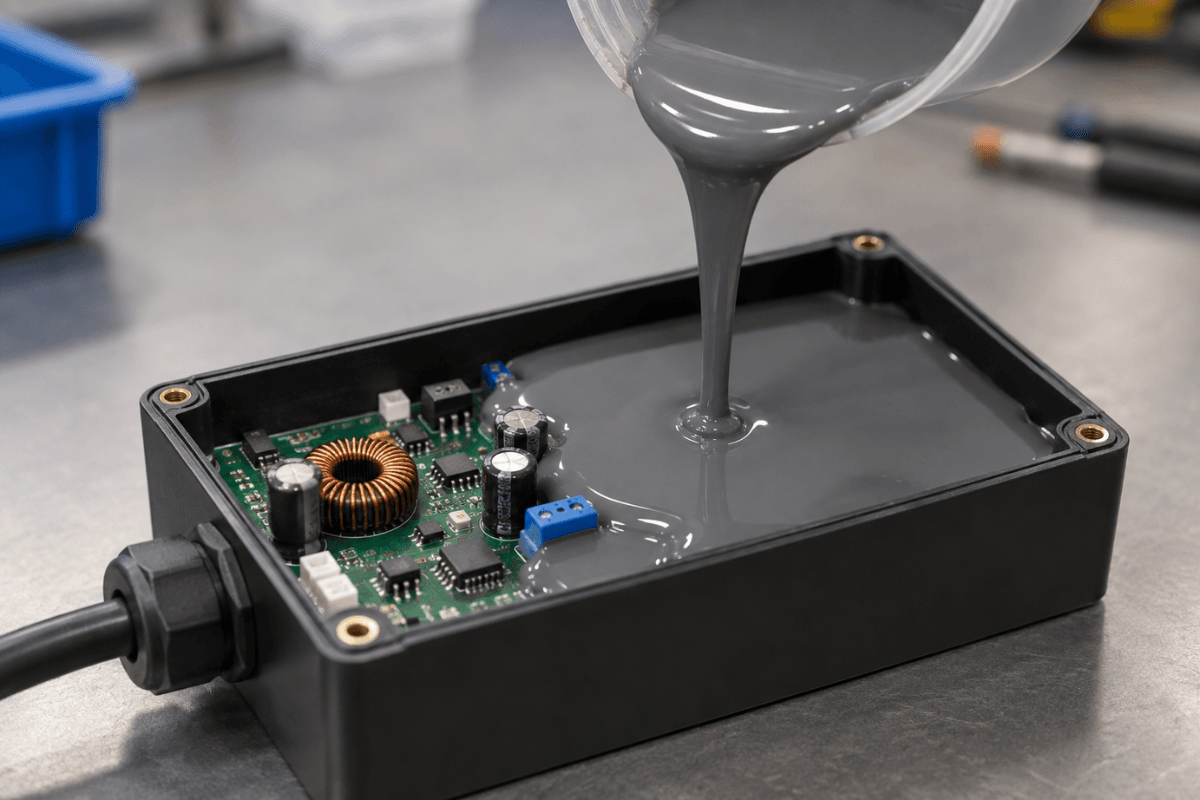
IMS Electronics Manufacturing works with Canadian OEMs evaluating or executing reshoring initiatives. Based in Calgary, IMS handles circuit board and PCB assembly, cable and harness fabrication, precision sheet metal, conformal coating, and complete box build under one roof — giving OEMs a single manufacturing partner across multiple stages of their product build.
Every reshoring programme begins with understanding what can be transferred, what may need to change, and what risks need to be addressed before production moves. IMS works with OEMs through DFM review, production planning, and qualification activities to help ensure the transition is fully understood before commercial production begins. Reach our team at 587-816-4300 or fill out our online form.