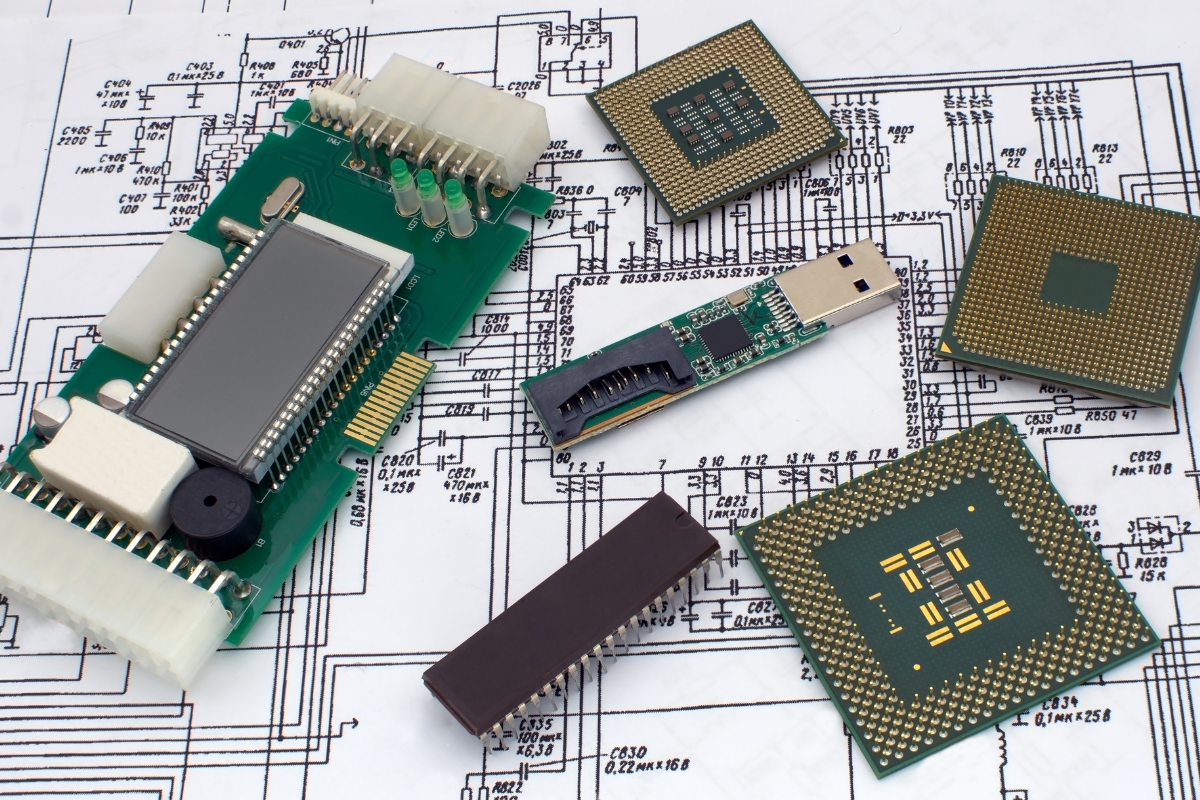
The electronic component shortage affecting semiconductor markets in 2026 is one piece of a larger picture that manufacturers and their customers are navigating together.
Component costs are rising.
Availability on certain parts is tighter than it was a year ago.
And lead times that once felt predictable have become anything but.
For businesses that rely on contract electronic manufacturing services, understanding what’s driving these changes and planning accordingly is the most practical thing you can do right now. IMS Electronics is seeing all three of these pressures firsthand, and we want our customers to have a clear picture of what that means for their builds.
What’s behind the electronic component shortage and rising costs?
Semiconductors, and memory in particular, are where IMS is seeing the most pressure. IC manufacturers have been issuing price increase notifications with very little lead time, and in some cases those increases apply to shipments already in progress. Existing purchase orders aren’t always locked in the way customers assume.
The reason comes down to where the money is going right now. Data centers and AI infrastructure are absorbing semiconductor manufacturing capacity at a scale that’s reshaping how suppliers prioritize production. Other product categories are competing for what remains.
Shipping costs are rising alongside it, moving in line with supply and demand. According to IMS President and Founder Dave Elhard, both trends are expected to continue.
What’s happening with lead times?
Lead times on many integrated circuits are extending without warning. You can have a part on order, expect it in eight weeks, and find out it won’t arrive for another ten on top of that. No notice, no heads up, just a longer wait than your production schedule accounted for.
The challenge isn’t just the length of the wait. It’s the unpredictability. When lead times shift without warning, the window to adjust your schedule or find an alternative source narrows fast. Building that buffer into your planning before you need it is considerably easier than finding yourself without options mid-build.
Don’t be afraid to carry inventory.
A part that has an eight-week lead time when you quote can be a 52-week wait by the time you place the order. Stock on hand is protection against that gap.
A note on broker sourcing:
When a component isn’t available through standard distribution, brokers can fill the gap. In a healthy market, broker pricing is often competitive. In a constrained one, it can run 2x to 100x the standard price.Beyond cost, there’s the question of reliability. IMS works exclusively with brokers we know and have established terms with, and there’s a reason for that standard. IMS has warned customers against using an unknown broker, been overruled, and watched the order come back counterfeit or not at all. It happens more than people expect.
What component shortages mean for your production schedule.
The most effective thing you can do during this electronic component shortage is get your purchase orders in place earlier than you think you need to. IMS recommends planning POs out to at least the end of 2026, with a full year being a reasonable target for businesses with ongoing builds. The earlier we understand your build schedule and BOM requirements, the more options we have to source components at reasonable cost and realistic timelines.
Talk to IMS before your timeline gets tight.
If you’re a current IMS customer and haven’t reviewed your component supply for the second half of 2026, it’s worth a conversation now. If you’re evaluating IMS as a manufacturing partner, supply chain transparency is part of how we operate. You’ll know what we’re seeing, what we recommend, and why.
Reach our team at 587-816-4300 or submit your project details through our online contact form.