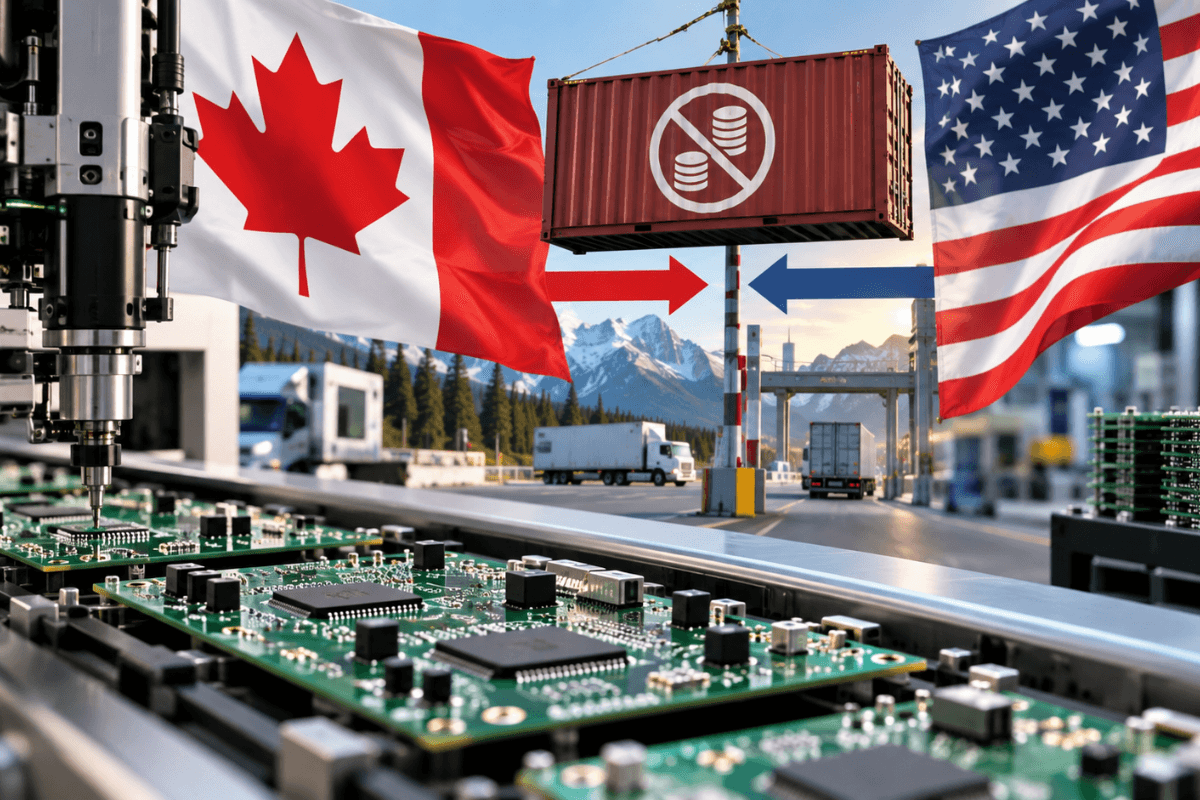
Right now, three forces are changing how OEMs think about DFM: tariff uncertainty that makes landed cost a moving target, reshoring pressure that forces a total-cost-of-ownership view, and component lead-time volatility that turns the BOM into a strategic risk. The result? OEMs are no longer waiting for the quoting stage to ask, “Can we build this cheaper?” They’re asking it in the first design review.
That shift changes what buyers actually want to know. Not just what DFM is, but specifically how DFM reduces manufacturing costs across the decisions that matter most right now: sourcing, timeline, and total cost of ownership.
Why DFM Is Getting More Attention Right Now
Tariff uncertainty is rewriting landed cost math.
Duty rates have moved enough, and often enough, that a landed cost calculated six months ago may no longer hold. Manufacturers are responding by raising prices and reconsidering where products get built, which means a design’s bill of materials and sourcing footprint now carries cost exposure that didn’t exist a few years ago. DFM decisions made at the layout stage, like which components are standard versus specialized, directly affect how exposed a product is to that volatility.
Reshoring pressure is forcing a total-cost-of-ownership view.
Choosing a manufacturing partner closer to home changes the cost conversation from “what does this cost per unit” to “what does this cost including freight, customs complexity, inventory carrying costs, and the risk of a supply disruption.” DFM plays into that math directly: designs built around available, well-supported components travel that transition more easily than designs locked to a single distant supplier.
Component lead-time volatility is turning the BOM into a risk register.
Semiconductor demand has climbed sharply, and that demand is tightening availability and stretching lead times across several component categories. A design with no approved alternates for a hard-to-source part is a sourcing headache. It also adds cost and schedule risk that compounds every time that part’s lead time shifts.
None of these three forces are new on their own. What’s new is how directly they now connect to design decisions made months before a product ever reaches the production floor. Together, they explain how DFM reduces manufacturing costs today: not through a single technique, but through earlier visibility into decisions that used to wait until production.
Two Cost Areas Most DFM Conversations Skip
Fewer redesigns and engineering change orders.
The further a design gets into tooling and production, the more expensive a change becomes. A layout issue, an end-of-life component, or a mechanical conflict caught during an early DFM review costs a design revision. The same issue caught after tooling is committed costs a requalification, a schedule slip, and often an expedited part order at a premium. Getting your manufacturing partner into the design conversation early is less about collaboration for its own sake and more about closing the window where changes are still cheap.
Lower total cost of ownership, not just lower build cost.
A design optimized purely for the lowest unit cost can still be expensive if it fails in the field. Design for Test and Design for Reliability, thinking through test access, thermal performance, and stress points, reduce warranty claims, field repairs, and the reputational cost of a product that doesn’t hold up. For OEMs weighing reshoring or a new manufacturing partner right now, this is often the more important number: not what the board costs to build, but what it costs to own over its working life.
For the Technical Playbook, See Our PCB Design and Assembly Guide
If you’re looking for the specific design decisions that affect assembly time, component cost, and yield, our guide on PCB design and assembly best practices for cost-effective manufacturing covers that ground in detail, down to real cost-savings scenarios from component substitutions and layout changes. This article is the strategic context behind why that level of detail matters more than it used to.
How IMS Approaches DFM as a Cost Strategy
At IMS, a DFM review isn’t a formality before quoting. It’s where we look at a design against the same pressures OEMs are weighing right now:
- Does the BOM lean on components with volatile lead times?
- Does the design assume a sourcing region that may no longer be the cheapest option?
- Would a design change now save a costly revision later?
This is how DFM reduces manufacturing costs in practice. By catching those questions while a design is still easy to change, not after.
Because we handle PCB assembly and custom enclosure fabrication in one facility, that review can account for the full product, not just the board, before a design is locked in.
Talk to IMS Before Your Design Is Locked In
Tariffs, lead times, and sourcing decisions are moving fast enough that understanding how DFM reduces manufacturing costs for your specific build is worth doing earlier than most teams are used to.
Get in touch with our team to walk through your design before those decisions get expensive to change.