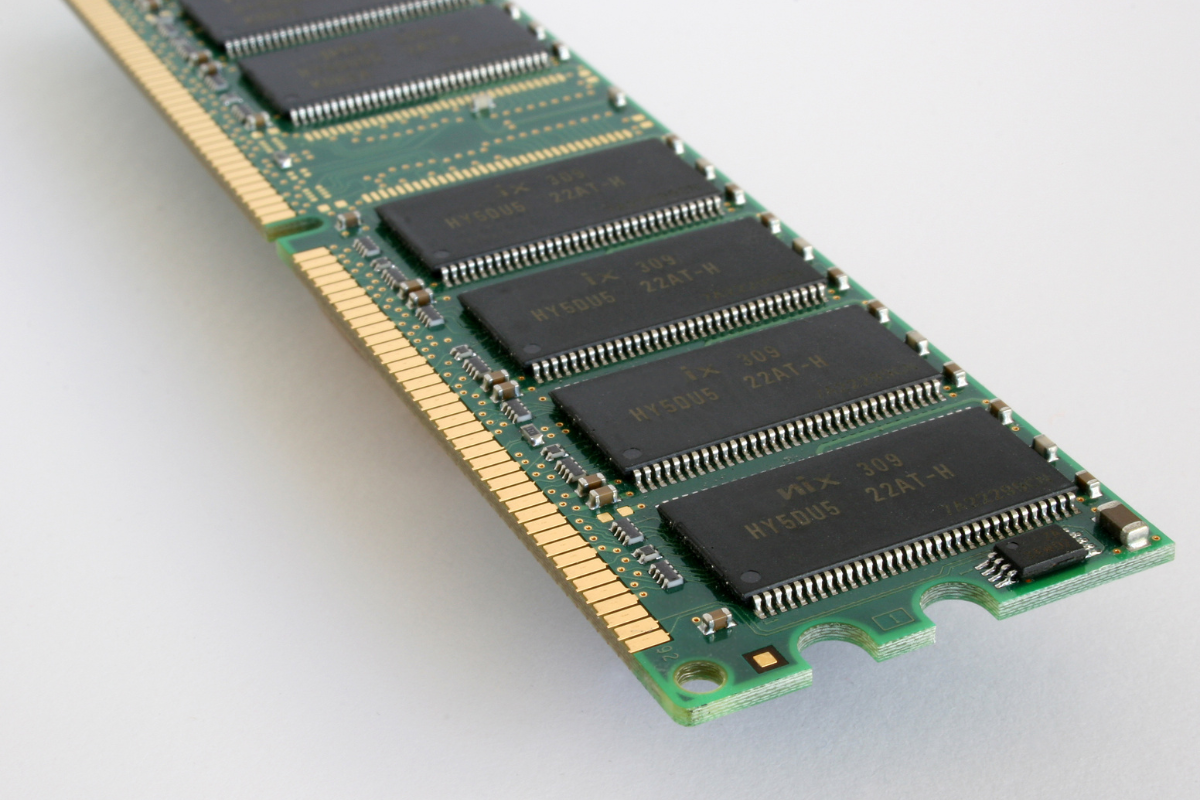
The headlines about AI and the memory chip shortage have been focused on laptops, gaming consoles, and smartphones. That’s where the story is most visible to consumers. But the same shortage hitting Best Buy shelves is working its way through electronics contract manufacturing customers across North America, and the effects on component availability, costs, and lead times are real and ongoing.
Why the memory chip shortage exists.
Three companies dominate the world’s RAM supply: South Korea’s Samsung and SK Hynix and U.S.-based Micron Technology. For years, these manufacturers produced conventional DRAM for the devices most of us use every day. Then AI arrived at scale.
The rapid build-out of AI data centres has created extraordinary demand for high-bandwidth memory, a specialized, higher-margin chip that conventional data centres and consumer devices don’t use. Samsung, SK Hynix, and Micron made a deliberate strategic choice to shift production capacity toward high-bandwidth memory and away from conventional DRAM. The margins are better, the contracts are larger, and the customers placing those orders are some of the most well-capitalized companies in the world.
The scale of AI investment in data centres has effectively redirected the world’s memory chip production toward a single category of buyer, leaving conventional demand competing for what remains. CBC News has been covering this shift closely, and the picture isn’t improving in the near term.
How this flows into electronics manufacturing.
A single AI server consumes anywhere from 10 to 20 times more memory than a conventional workstation. Hyperscalers like Microsoft, Google, Meta, and Amazon are placing enormous orders to build out their AI infrastructure, and chip manufacturers are prioritizing those contracts.
Enterprise buyers, contract manufacturers, and their customers are working with what remains.
IMS Electronics President and Founder Dave Elhard has been watching this play out in real time. Semiconductors, and memory in particular, are where IMS is seeing the most pressure. IC manufacturers have been issuing price increase notifications with very little lead time, and in some cases those increases apply to shipments already in progress. Existing purchase orders don’t always hold the way customers expect them to.
The reason, as Dave sees it, is straightforward: manufacturers are chasing AI demand and leaving others to flounder.
What this means for your costs and availability.
The memory chip shortage isn’t a temporary pricing blip. Analysts expect the structural supply constraint to last through 2027 and beyond. New manufacturing capacity takes years to build. The companies rushing to construct new facilities now won’t relieve the current pressure for some time.
For electronics manufacturing customers, this translates into three concrete pressures:
- rising component costs
- tighter availability on certain parts
- lead times that are extending without warning
A component quoted at one price may cost significantly more by the time the order is placed. Parts that appeared available when a PO was submitted may be on allocation by the time production begins. Lead times on many ICs are moving out without notice.
Shipping costs are rising alongside component prices, moving in line with supply and demand. Dave expects both trends to continue.
What to do now.
The instinct in an uncertain market is often to wait for conditions to stabilize. In this environment that’s the riskier move. The supply constraint is structural, not cyclical, and the companies best positioned right now are the ones that started planning early.
Getting purchase orders in place now is the most practical step available. IMS recommends planning POs out to at least the end of 2026, with a full year being a reasonable target for businesses with ongoing builds. Carrying some inventory is worth considering too. A part that has an eight-week lead time when you quote can be a 52-week wait by the time you place the order. Stock on hand is protection against that gap.
The broader picture on component availability, lead times, and what IMS is seeing across customer BOMs is covered in detail in our article on component availability and rising costs in 2026. If you’re managing a production schedule and haven’t reviewed your component supply recently, that’s the place to start.
Keep building through the memory chip shortage.
If component costs or availability are affecting your build, or you want to pressure-test your BOM against current market conditions, reach our team at 587-816-4300 or fill out our contact form.