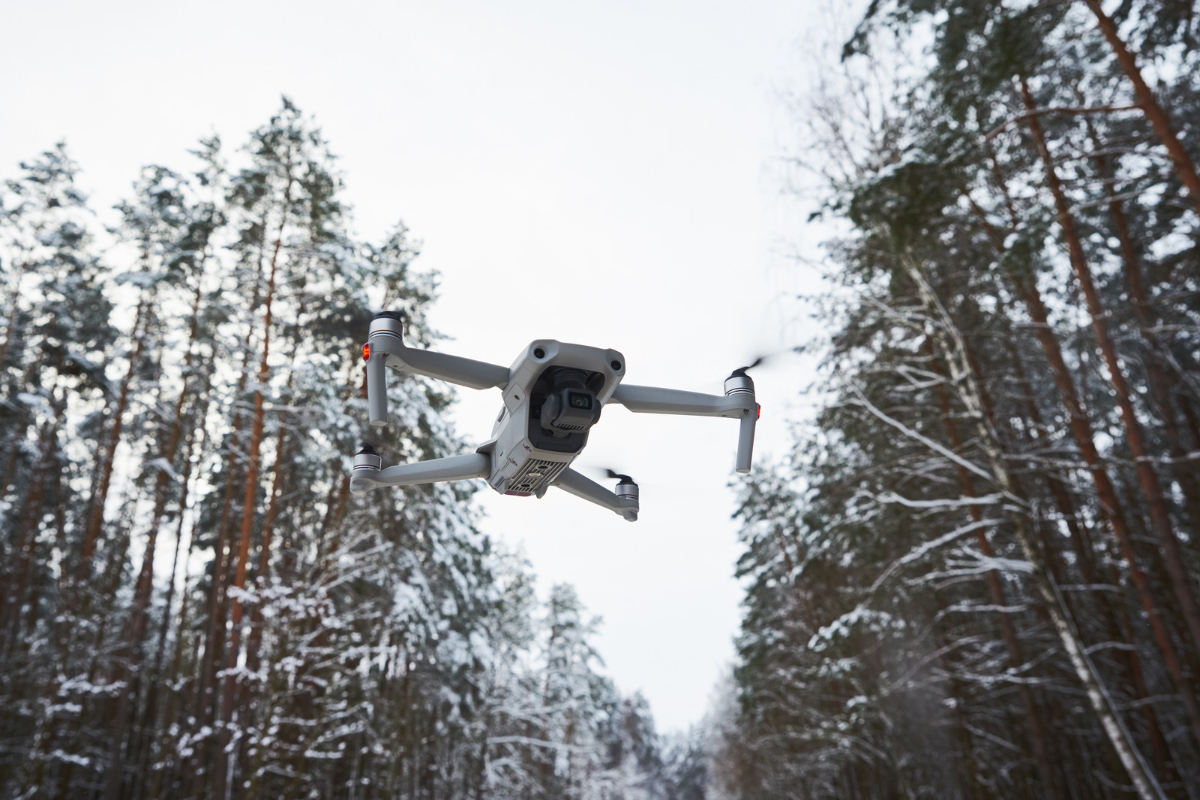
In 2023, Mads Petersen (owner of Greenland-based startup Arctic Unmanned) did a test of a small drone at −43 °C. He was sitting in a car to keep warm while he ran the test. The battery lasted just three minutes, he told Reuters.
That’s one test, not a prediction for every drone. But it does raise a question for Canadian drone manufacturers and the teams that are building equipment for them. When you say something is built for −40 °C, what exactly do you need it to do?
Does it have to survive the cold or work in it?
Say you’re building a camera module for a drone that’s going to be monitoring a remote site. The module is going to spend the night in an unheated truck. Is it sufficient for the camera to just work when it’s warmed up, or does it have to be on and transmitting live video whilst it’s still cold? Those are two very different things and Canadian drone manufacturers need to know which one they’re actually designing for.
The aircraft has its own limits, too. The Matrice 400 for instance has a listed operating temperature range of −20°C to +50°C without solar radiation according to DJI. If your camera works at −40°C that doesn’t mean the drone can fly at −40°C. Transport Canada’s guidance to drone pilots is that you must stay within the manufacturer’s limits for temperature, moisture and all the other factors.
See what happens when you switch it on.
A camera that just keeps streaming as it gets colder hasn’t demonstrated that it can start from cold. To test this, switch the module off and leave it until it has reached the target temperature. Then switch it on while it’s still cold and see how long it takes to get a decent picture.
Watch the power supply. Cold will reduce the output of a Li-ion battery so a test with a steady lab supply may not give you any indication of what happens when the module is actually drawing power from the aircraft. For the camera a clear pass is more than just the light coming on. The picture appears within the time you’ve set and the stream stays up.
Check the cables and connectors as well. Some cable jackets will stiffen up and crack when flexed in the deep cold and the connectors need to be workable with gloves on.
Don’t forget what happens when it comes inside.
Think of a pair of glasses fogging up as you walk into a building in the winter. The same thing can happen to a cold camera module. Moisture from the warm air can condense on the cold module and end up inside the housing where it can fog the camera window or lead to corrosion.
A protective coating will help to protect the circuit board, but won’t seal the housing or keep the camera window clear. For boards where you need more protection than a coating provides, read our guide to potting electronics for harsh environments. Canadian drone manufacturers should be looking at the entire module, from the point where the cable comes in, through to the way the camera window is sealed and what happens when the unit goes from a cold truck into a warm shop.
As the housing cools and warms it can suck in any ambient moisture through a gap. A breathable membrane vent will allow the pressure to equalize without allowing moisture in.
Test the version your customer will get.
Start with the bare board if you’re troubleshooting, but do your final checks with the board in the housing using the cables, connectors, seals, and coating that you’re going to ship.
For the camera module, that means answering three questions:
- After storage: does the camera still work once it’s warmed back up?
- At cold start: does it turn on and deliver a usable video stream while it’s still cold?
- Back indoors: does the picture stay clear, and does the module still work after repeated trips between the cold and a warm, humid space?
Repeated trips between cold and warm also stress solder joints, because the board and its components expand and contract at different rates. Damage can build up over many cycles before it shows.
Decide what counts as a pass before you run the tests. The IEC have separate methods for cold exposure and for changes in temperature, so don’t assume that one cold test will answer all three of those questions.
What should Canadian drone manufacturers bring to an EMS partner?
You don’t need to start with a massive spec sheet. Bring the expected temperatures, what has to work at each one, and how you’ll know it passed. Bring your board, cable, and housing drawings too, so your manufacturing partner can flag things like a test connection you won’t be able to reach once the module is closed up.
IMS Electronics Manufacturing handles PCB assembly, cable harnessing and conformal coating, and box build in Calgary. If you’re building electronics for a drone or camera module that needs to work in the cold, talk to IMS about your build before you finalize the design.